Santaquin Real Estate Market Trends: What Buyers Need to Know in 2026
The Santaquin real estate market trends heading into 2026 reflect a small city transitioning from rural town to regional hub. According to Redfin, typical Santaquin homes in late 2025 spent between 25 and 35 days on market, notably faster than many Utah County communities. That window shows steady, but not frantic, demand. With new construction along Summit Ridge Parkway and infill near South Main Street, inventory is expanding while maintaining a price floor supported by strong Utah County employment corridors along I‑15.
How Are Home Prices in Santaquin Likely to Move in 2026?
Price trends in Santaquin reflect both local amenities and broader Utah County growth. According to Zillow, typical home values in Santaquin through late 2025 fell within a band between $430,000 and $480,000, with a noticeable spread between townhomes near East Main Street and larger lots closer to Santaquin Canyon Road. That range positions Santaquin below many Spanish Fork and Springville price points, drawing budget-conscious buyers who still need access to Provo and Orem employment centers.
Entry-level homes in older parts of town near Santaquin Elementary School often trade at discounts relative to new construction above Summit Ridge Parkway. Based on listing data aggregated by Realtor.com, smaller three-bedroom homes have recently closed between $360,000 and $420,000, while new builds with larger garages and unfinished basements commonly land between $500,000 and $575,000. That spread rewards buyers who are comfortable with light updating in exchange for lower upfront costs.
Price appreciation expectations remain moderate rather than speculative. According to trend summaries from Redfin, Santaquin’s annual price movement in recent years generally fell in the 3% to 6% range, depending on sub‑neighborhood and property type. That pattern indicates a market driven by organic household formation and job growth, not short-term flipping. With limited large multifamily projects near Orchard Cove Park, detached single-family homes are likely to continue setting the local pricing baseline through 2026.
What Do Inventory Levels and Days on Market Signal for 2026 Buyers?
Inventory in Santaquin remains lean but more balanced than during the peak pandemic years. According to Realtor.com, active listings in late 2025 typically ranged from 35 to 55 homes at any given time, a noticeable increase from the sub‑25 levels seen earlier in the decade. This modest expansion stems from ongoing subdivisions off Summit Ridge Parkway and new phases near the Santaquin City Recreation Center, easing pressure on buyers who previously faced double‑digit offer counts.
Days on market provide a second lens on Santaquin real estate market trends. As noted earlier, Redfin data shows typical market time hovering between 25 and 35 days. Homes on quieter interior streets such as 200 South and 400 East often go under contract closer to the lower end of that range. Properties backing busy corridors like Main Street or near the I‑15 interchange can linger toward 40 days, especially if pricing overshoots comparable sales near Harvest View Park.
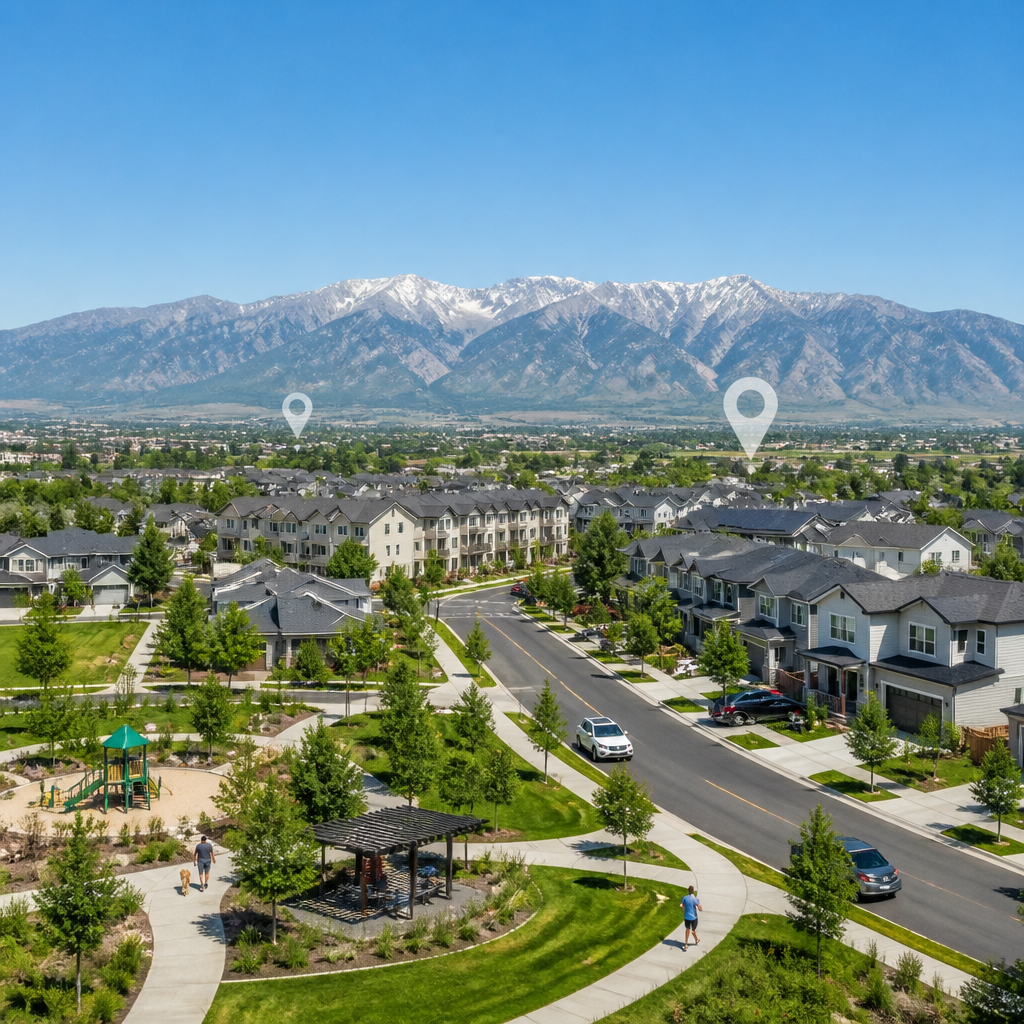
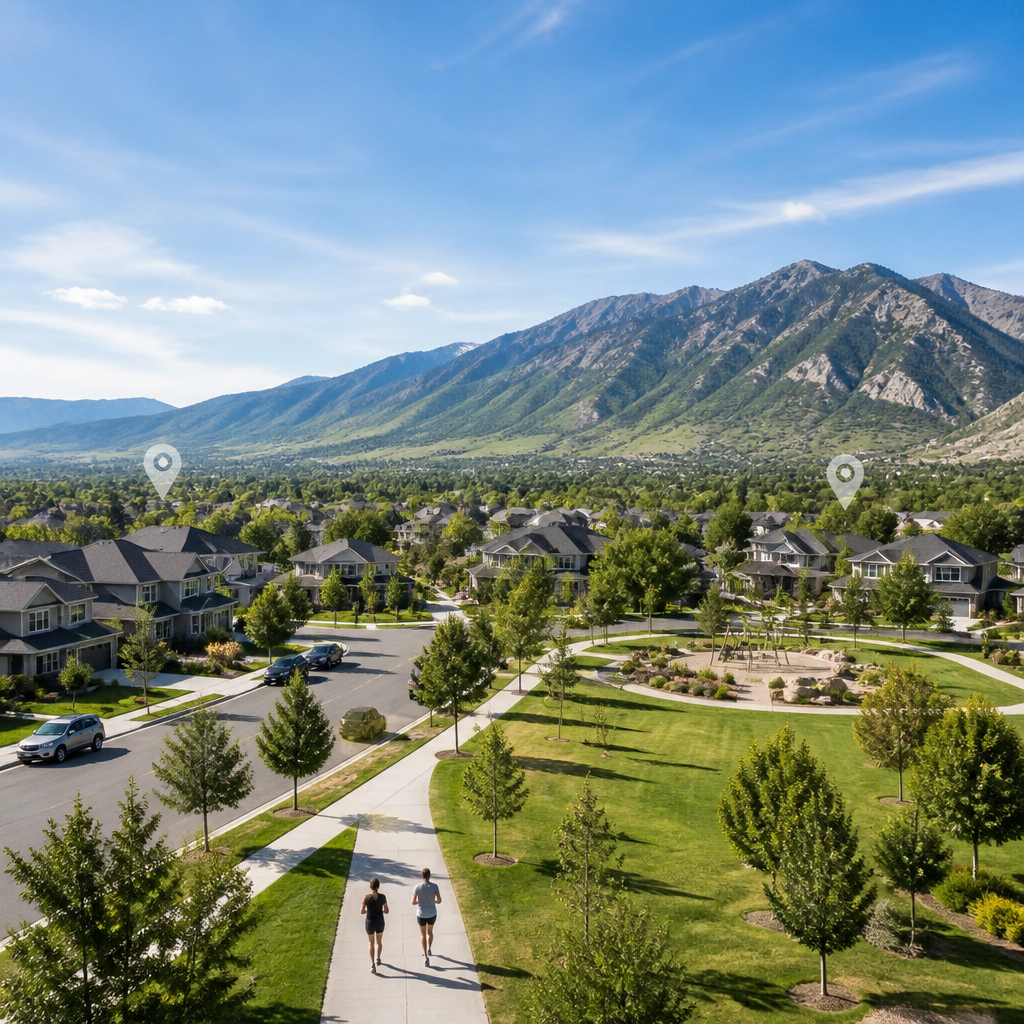
On mild spring evenings, listings near Orchard Cove Park highlight more than square footage. The soft hum of traffic along Santaquin Canyon Road fades behind the rustle of cottonwood leaves, while the smell of freshly cut grass from the ballfields drifts across fenced backyards. Porch lights flicker on along 100 North as residents walk dogs toward Centennial Park, and the warm glow inside Rowley’s Red Barn a short drive away gives the neighborhood a lived‑in, approachable atmosphere that photographs struggle to capture fully.
How Competitive Are Offers, Negotiations, and Closing Terms in Santaquin?
Offer dynamics in Santaquin have cooled from the frenzy of 2021 but remain selectively competitive. According to bidding statistics from Redfin, the share of homes selling above list price recently hovered between 20% and 30%, far below the peak above 50% seen earlier in the decade. Homes within walking distance of Santaquin Elementary School or the Santaquin Library still attract multiple offers, especially when priced below $450,000 and presented in turnkey condition.
Concessions and inspection terms show a more balanced negotiation environment. Data summarized by Realtor.com indicates that a growing share of recent deals included closing cost credits, often ranging from $3,000 to $7,500, particularly on homes that have sat beyond 30 days. FHA buyers using the standard 3.5% minimum down payment, as outlined by the U.S. Department of Housing and Urban Development, increasingly gain traction in townhome communities south of Main Street.
Weekend open houses along Summit Ridge Parkway often feel more like casual gatherings than high-pressure sales events. The smell of grilled food from nearby backyards mixes with the sweetness of cider samples brought in from Rowley’s Red Barn, while soft conversation echoes through unfinished basements. From living room windows, visitors take in wide views toward Utah Lake and the Oquirrh Mountains, and the muted rumble of I‑15 in the distance underscores how close yet separate Santaquin remains from busier Provo and Orem corridors.
Which Neighborhood Features Most Influence Value Within Santaquin?
Within Santaquin, micro‑locations can shift value by tens of thousands of dollars. Homes with walkable access to Orchard Cove Park, Centennial Park, and the Santaquin City Recreation Center consistently command premiums. According to neighborhood commentary on Niche, residents particularly prize proximity to playgrounds, ballfields, and walking paths, especially on streets like 300 West and 400 South. That demand supports stronger resale performance for homes on cul‑de‑sacs near Harvest View Park compared with properties closer to industrial uses along 100 East.
School access also plays a critical role. GreatSchools ratings show Santaquin Elementary School and Orchard Hills Elementary with scores in the 6 to 8 out of 10 range, depending on year and metric, according to GreatSchools. Even though Payson High School and surrounding secondary campuses sit a few miles north along Main Street and State Route 198, families still view the Santaquin attendance areas as stable, driving interest in established blocks off 400 East where sidewalks and mature trees create a more finished neighborhood fabric.
Amenity clusters enhance value further. Homes near the Santaquin Marketplace shopping area, the local McDonald’s on Main Street, and gas stations just off the I‑15 interchange benefit from convenient daily services. Meanwhile, properties within a short drive of Santaquin Canyon, Whiting Campground, and recreation trails into the Uinta‑Wasatch‑Cache National Forest appeal to outdoor‑oriented buyers. These combined amenities help explain why homes west of I‑15, closer to agricultural land and fewer services, often list at $20,000 to $40,000 less than similar square footage closer to downtown Santaquin.
How Do Commute, New Construction, and Future Growth Shape 2026 Prospects?
Commute patterns continue to underpin Santaquin real estate market trends. The city sits roughly 21 miles south of Provo along I‑15, with typical drive times ranging from 22 to 35 minutes depending on traffic, based on estimates from Google Maps. That balance of distance and affordability attracts workers who find Springville and Spanish Fork pricing increasingly out of reach. Access to State Route 6 also positions Santaquin as a gateway toward Price and eastern Utah employment corridors.
New construction plays an outsized role in shaping the 2026 outlook. Santaquin City’s official planning documents, available through the City of Santaquin, highlight ongoing residential expansion in Summit Ridge and potential mixed‑use development along Main Street. Builders are introducing more townhome and small‑lot single‑family product in the 1,600 to 2,400 square‑foot range, appealing to first‑time and move‑down buyers. These additions should prevent extreme inventory shortages while still preserving price support for established neighborhoods near Santaquin Library and Centennial Park.
Longer term, infrastructure investments will influence values. As population climbs toward the mid‑20,000s over the next decade, based on projections cited by Mountainland Association of Governments, pressure will grow for expanded commercial services near Santaquin Marketplace and improved trail connectivity linking Orchard Cove Park to surrounding subdivisions. Homes already positioned near planned road improvements or future retail nodes are poised to benefit most, while properties in pockets with limited access may see more modest appreciation relative to the citywide trend.
The 25 to 35-day average market time cited at the start of this guide reflects a Santaquin market that rewards decisive, but not rushed, action from informed buyers. That 35-day figure from the opening underscores a shift away from the ultra‑competitive bidding wars of earlier years while still signaling underlying strength. The UtahRealEstate.com MLS statistics dashboard offers one of the most detailed real‑time views of new Santaquin listings and absorption trends. Buyers who register listing alerts there and commit to touring promising homes within 48 hours of activation before the late‑spring surge in May typically secure more favorable pricing and concessions, while those delaying decisions into early summer often face tighter inventory and reduced negotiating leverage.