Moving to Mapleton UT: A Comprehensive Guide for New Residents
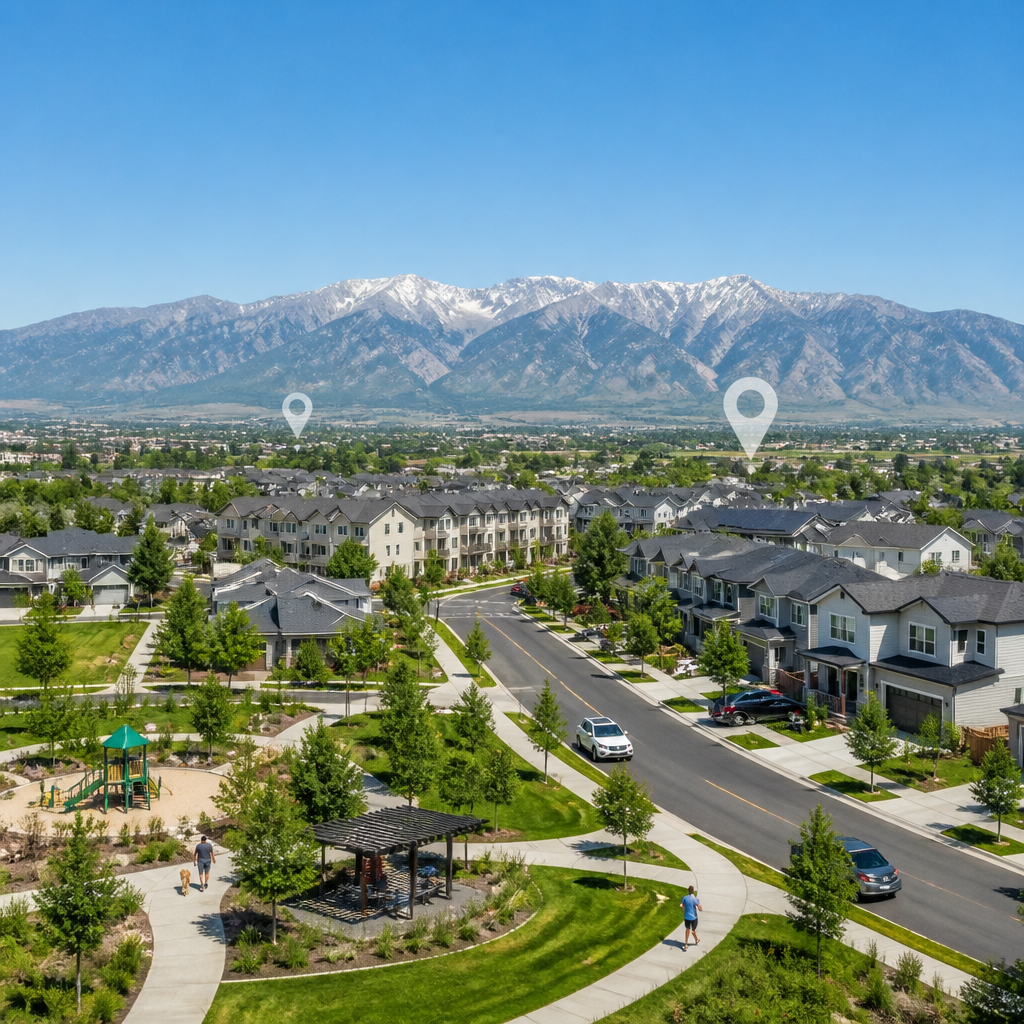
Moving to Mapleton UT appeals to many along the Wasatch Front because of its mountain backdrop, small-town scale, and access to larger job centers in Provo and Orem. According to U.S. Census QuickFacts, Mapleton’s population sits around 12,000 residents as of 2023, more than double its size two decades ago. This guide outlines housing, schools, commuting, recreation, and day-to-day amenities so new residents gain a clear, practical sense of life in Mapleton before unpacking the first moving box.
What Is Daily Life Like When Moving to Mapleton UT?
Mapleton stretches along U.S. Route 89 at the base of the Wasatch Range, with Mapleton Parkway and Main Street forming the primary local corridors. The city transitions quickly from established neighborhoods near Mapleton City Park to newer subdivisions around Ira Allan Sports Park and Eagle Rock Park. According to Niche, Mapleton earns an overall grade in the A range for livability, reflecting low crime levels, strong schools, and access to outdoor space, while remaining quieter than nearby Springville and Spanish Fork.
Neighborhood streets typically feature wide front setbacks, generous yards, and views toward Maple Mountain and Hobble Creek Canyon. Evening traffic along Highway 89 stays moderate compared to Interstate 15, and local roads such as 1200 North and 800 South feel residential rather than commercial. According to Mapleton City, the community maintains more than 50 acres of park space, including Mapleton City Park, Decker Park, and Harvest Park, which anchor youth sports, concerts, and holiday events throughout the year.
On summer evenings at Mapleton City Park, the scent of grilled food drifts from family picnics while sprinklers cool the grass under bare feet. The sound of soft chatter from the Mapleton City Offices courtyard mixes with baseballs cracking against aluminum bats at Ira Allan Sports Park. Streetlights along Maple Street cast a warm glow on maturing trees as distant traffic on U.S. Route 89 fades into a low hum, giving the town center an unhurried, small-town atmosphere.
How Does the Housing Market Look for Moving to Mapleton UT?
Housing in Mapleton leans heavily toward single-family homes, with relatively few large apartment complexes. According to Redfin data through early 2024, typical closed-sale prices for Mapleton homes cluster in a broad band between roughly $600,000 and $900,000, with custom properties in foothill neighborhoods sometimes extending well above $1,200,000. Entry-level options are limited, but some smaller homes near Main Street and older streets east of Highway 89 occasionally list below that primary range.
Lot sizes remain a primary draw. According to Mapleton City zoning summaries on the planning department site, several neighborhoods still feature half-acre and even one-acre lots, especially closer to the foothills. These deeper parcels allow for detached garages, accessory structures, or hobby orchards. Newer developments near Harvest Park and along 1600 South trend smaller, often in the range of 0.15 to 0.25 acres, but provide modern floor plans, energy-efficient systems, and contemporary finishes.
Financing follows typical Utah County patterns. Based on guidance from HUD’s FHA program, many first-time buyers use minimum down payments of around 3.5%, then combine that with seller-paid closing costs or local assistance programs offered countywide. Property taxes in Utah County generally fall between 0.6% and 0.8% of assessed value, according to estimates by the Utah County assessor, which can keep overall monthly housing costs competitive with some neighboring states despite higher sticker prices.
What Schools and Educational Options Serve Mapleton Residents?
Public schools in Mapleton belong to Nebo School District, which also serves Spanish Fork, Salem, and Springville. Elementary students typically attend Maple Ridge Elementary or Hobble Creek Elementary, while middle grades feed into Mapleton Junior High on East 1200 North. High school students usually attend Maple Mountain High School in Spanish Fork, roughly 4 miles south of central Mapleton along Highway 89. According to GreatSchools, Maple Ridge Elementary holds a rating in the 8-out-of-10 range as of 2024, reflecting strong test scores.
Mapleton Junior High offers honors tracks and a range of extracurriculars, including orchestra, choir, and seasonal athletics hosted at Ira Allan Sports Park and the school’s on-site facilities. According to Nebo School District enrollment data shared through Nebo School District, several campuses in the Mapleton feeder pattern have grown by between 10% and 20% over the past decade, prompting boundary changes and facility expansions. Families often evaluate specific streets, such as 400 North or 1600 South, based partly on campus assignments and bus routes.
Higher education access also supports long-term planning. Brigham Young University in Provo lies about 12 miles north via U.S. Route 89, while Utah Valley University’s main campus in Orem is about 20 miles away. According to Utah Foundation, statewide educational attainment continues to climb, with more than 35% of adults holding at least a bachelor’s degree, supporting a professional employment base across Utah County that benefits Mapleton households.
How Convenient Is Commuting and Transportation in Mapleton UT?
Commuting from Mapleton typically involves driving, since the city remains primarily suburban and does not yet host its own FrontRunner commuter rail station. According to U.S. Census commute data, average one-way travel times for Mapleton residents hover around 25 to 27 minutes. Many commuters travel north to Provo or Orem via Highway 89 and connect to Interstate 15 near Springville, while others head south toward Spanish Fork’s industrial and retail corridors.
Morning drives along Mapleton Parkway reveal the low sun lighting up snow on Maple Mountain and steaming mugs in hands at Day’s Market as residents step out with groceries. The faint smell of exhaust mixes with the crisp scent of irrigated fields near 1600 South, while the distant whistle of a Union Pacific line in Spanish Fork underscores the region’s freight activity. Traffic noise builds gradually, never quite reaching the volume found near Orem’s University Parkway.
Public transit options remain limited but not absent. Utah Transit Authority bus routes connect Mapleton to Springville and Spanish Fork hubs, where transfers to additional lines and FrontRunner service become possible. According to UTA schedules, several weekday routes operate with headways in the range of 30 to 60 minutes, so residents often combine driving and park-and-ride usage. Cyclists frequently use Main Street and 1200 North to reach the Spanish Fork River Trail and Provo River Parkway.
What Recreation and Amenities Stand Out After Moving to Mapleton UT?
Outdoor access defines much of Mapleton’s appeal. The city’s eastern edge approaches Hobble Creek Canyon, offering quick access to canyon trails, picnic areas, and scenic drives. According to Mapleton Parks and Recreation, local parks such as Eagle Rock Park, Harvest Park, and Decker Park support more than 15 organized sports programs, from youth soccer and baseball to adult softball and pickleball leagues. Trailheads near Whispering Pines Drive and 1600 East provide entry to foothill paths with open views across Utah Valley.
Everyday amenities remain close at hand. Day’s Market on Highway 89 anchors grocery needs, while smaller businesses such as Costa Vida Mapleton, Subway Mapleton, and local salon studios line Mapleton Parkway and Main Street. Spanish Fork’s Canyon Creek Shopping Center, about 6 miles south, adds larger retailers and theaters. According to regional retail mapping compiled by Utah’s economic development office, residents in southern Utah County generally travel fewer than 10 miles for big-box shopping and entertainment.
Recreation also extends to cultural and community programming. Mapleton City hosts seasonal events at Mapleton City Park, including summer concerts, a summer celebration with food trucks, and holiday lighting displays. Nearby Springville Museum of Art, roughly 5 miles away on South Main Street in Springville, contributes additional cultural depth. The combination of local parks, nearby canyons, and regional attractions in Provo and Orem allows residents to balance quiet neighborhood evenings with higher-energy outings when desired.
How Should New Residents Prepare Financially When Moving to Mapleton UT?
Planning a move to Mapleton involves more than purchase price. According to a cost-of-living comparison by BestPlaces, overall expenses in Mapleton run roughly 15% to 20% above the national average, driven largely by housing. However, categories such as groceries and utilities track closer to national norms, and state income tax in Utah remains a flat 4.65% as of 2024. Fuel, insurance, and vehicle costs should also factor into budgets, given the car-oriented layout.
Utilities and municipal services remain relatively predictable. Mapleton City publishes current water, sewer, and garbage rates on its utilities page, with typical residential water base charges in the range of $20 to $30 per month as of 2024, according to city billing information. Irrigation shares or secondary water connections along streets such as 800 South and 1600 East can influence landscaping costs, especially for larger lots. Homeowners’ association dues in newer subdivisions may add another $50 to $100 per month, depending on amenities.
Long-term planning frequently considers regional job trends. Utah’s unemployment rate has hovered between roughly 2.5% and 3.5% in recent years, based on data from the Utah Department of Workforce Services, supporting relative employment stability. Proximity to technology employers in Lehi’s Silicon Slopes corridor, about 35 miles north, and institutions such as Brigham Young University and Utah Valley University provides multiple career paths that can support housing costs in Mapleton over time.
The population figure of around 12,000 residents cited at the start of this guide reflects Mapleton’s transition from rural outpost to established small city, while the doubled growth over two decades underscores sustained demand. That same 12,000-resident scale from the opening paragraph also signals that neighborhood character still matters in each subdivision choice. The UtahRealEstate.com MLS portal provides one of the clearest real-time views of new listings and price movements across Mapleton and surrounding Utah County communities. Buyers who register listing alerts there and commit to touring promising homes within 48 hours of activation before the late-spring inventory surge often secure stronger negotiation positions, while households that delay showings into early summer frequently face increased competition and fewer available properties.